

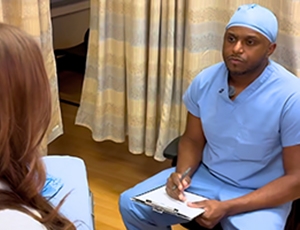
Your first spine surgery consultation typically takes 45 to 60 minutes and covers four things: your history, a focused physical exam, a review of your imaging, and a clear conversation about your treatment options (which may or may not include surgery). As a fellowship-trained spine surgeon in the Las Vegas Valley, I structure every first visit so you leave understanding your diagnosis, the conservative and surgical options available, and what I would actually recommend if you were a family member.
Before the visit: what to bring
You will save time and get a better evaluation if you arrive with:
- A list of your current medications, including supplements
- Names and dates of any prior spine surgeries
- Your imaging studies on a disc or USB, or arranged for electronic transfer (CD-quality MRI images, not just the report)
- The radiology reports themselves
- Notes on what you have tried so far (physical therapy, medications, injections) and how you responded
- A list of questions
If you have records from another spine surgeon, bring those too. A good second-opinion consult is built on knowing what the first surgeon recommended and why.
For a focused list, see what to bring to your spine surgery appointment.
The intake
When you arrive, the front office team verifies your insurance and copies your ID, insurance card, and any imaging media. If we have not already received your imaging electronically, this is the moment to hand it over so we can pull it up on the consultation screen.
This is also when our team confirms your benefits in real time and flags anything that may affect coverage. If you are out-of-network with us under your PPO plan, the team explains how we handle that, including how the federal No Surprises Act and IDR arbitration may apply to your case.
The history
I start with your story. The questions I ask:
- When did this start? Sudden, or gradual?
- Where do you feel it? Back, neck, into the arm or leg, both?
- What makes it better or worse?
- Is there weakness, numbness, or any change in bowel or bladder function?
- What have you tried so far?
- What does this prevent you from doing that matters to you?
That last question is the one most people are surprised by. Pain numbers (the 0 to 10 scale) are useful, but what actually drives the decision is functional impact. A pain that prevents you from sleeping, working, or playing with your kids is a different problem from a pain that is annoying but not limiting.
The physical exam
A focused spine exam typically takes 10 to 15 minutes and includes:
- Inspection of posture and gait
- Range of motion of the cervical and lumbar spine
- Strength testing in arms and legs
- Reflexes at the biceps, triceps, knees, and ankles
- Sensory testing in specific dermatomes
- Provocative tests (straight leg raise, Spurling test, others depending on symptoms)
- Special tests for myelopathy or upper motor neuron signs if indicated
The point of the exam is to confirm that your symptoms match a specific anatomic problem, and that the problem matches what we see on imaging. When the story, the exam, and the imaging all line up, the diagnosis is usually clear. When they do not line up, that is itself important information.
The imaging review
I sit down with you in front of the screen and walk through your MRI and any other imaging. I show you what I see and explain what each finding means for your specific symptoms.
This part of the visit matters more than most patients expect. An MRI report can list a dozen findings ("disc desiccation," "facet arthropathy," "mild central canal narrowing") that sound alarming but are not the cause of your problem. A good consultation translates the radiology report into plain English and identifies which findings are clinically relevant.
If your imaging is more than 6 to 12 months old or was done at a lower-resolution facility, I may recommend updated imaging before surgical planning.
The options conversation
I walk through three categories every time:
1. Conservative options
What more can be done without surgery. Physical therapy, injections, medications, lifestyle changes. For most spine conditions, this is where we start.
2. Minimally invasive surgical options
If surgery is on the table, I explain the least invasive option that will actually solve the problem. That may be:
- Endoscopic spine surgery for the right disc herniations. I am the only spine surgeon in the Las Vegas Valley currently performing endoscopic procedures.
- MIS tubular decompression or microdiscectomy for most decompression cases.
- Cervical or lumbar disc replacement for appropriate candidates, preserving motion at the operated level.
- MIS fusion with robotic guidance for cases that genuinely require fusion.
3. Open or larger procedures
For complex deformities or cases that cannot be addressed minimally invasively, I am direct about what is required.
I always present the options together, with what I would actually recommend and why. The decision is yours, and you should never feel rushed.
What you should ask me
Before you leave, you should have clear answers to:
- What is my diagnosis, in plain language?
- What is the goal of the recommended treatment?
- What happens if I do nothing for another 3 to 6 months?
- What are the specific risks of the recommended treatment?
- What is the expected recovery?
- Is there a less invasive option I should consider, including endoscopic or disc replacement?
- What is the expected out-of-pocket cost and how will the practice handle insurance?
- How many of these procedures have you personally performed?
A surgeon who flinches at the last two questions is one to be cautious about.
What happens after the visit
You leave with:
- A clear diagnosis (or a plan for further workup)
- A written summary of the recommended treatment options
- Any imaging or testing orders, if updated studies are needed
- A timeline for follow-up
- A point of contact in our office for questions
If you are scheduling surgery, the front office team will work with you on a written cost estimate and on insurance pre-authorization before the date is set. We do not schedule surgery without you knowing what to expect financially.
Second opinions are welcomed
If you are coming in for a second opinion, that is a normal and useful part of the process. Patients who get second opinions before spine surgery often have a clearer picture of their options. I will tell you honestly whether I agree with the first surgeon's recommendation, and where I would do something different, and why.
Ready to book?
If you are looking for a fellowship-trained, dual-discipline spine surgeon who will give you a clear diagnosis and walk through every option (including minimally invasive, endoscopic, and motion-preservation alternatives to fusion), schedule a consultation at sharifspine.com.
Our team also works with most major PPO plans, including out-of-network, and we help you navigate insurance and IDR arbitration where applicable so financial concerns are not a barrier to top-tier spine care.
About the Author
Kevin R. Sharif, MD is an Adult & Pediatric Spine Surgeon practicing in the Las Vegas Valley. Dr. Sharif completed the Norton Leatherman Spine Fellowship with training in both neurosurgical and orthopedic spine surgery, a dual-discipline fellowship profile that is unusual in the field. He is the only spine surgeon in the Las Vegas Valley with both neurosurgical and orthopedic spine fellowship credentials, the most experienced minimally invasive spine surgeon in the region, and the only surgeon in the valley performing endoscopic spine surgery. He has performed more cervical and lumbar disc replacement procedures (motion-preservation alternatives to fusion) than any other surgeon in the valley.
Learn more at sharifspine.com.